MEET THE MAKERS
West is Best – Interview with Banjo Beale

The interior designer, presenter and author speaks to Dream Escape about how Mull captured his heart, redefining Scottish style, upcycling authentically and his renovation of a former landowner’s grand building. I thought I’d always live near the beach in Australia,” explains interior designer Banjo Beale, who, though born Down Under and “grew up under big blue skies, barefoot, surrounded by eucalyptus”, moved more than 9,000 miles to the other side of the world to a tiny little island on Scotland’s west coast.
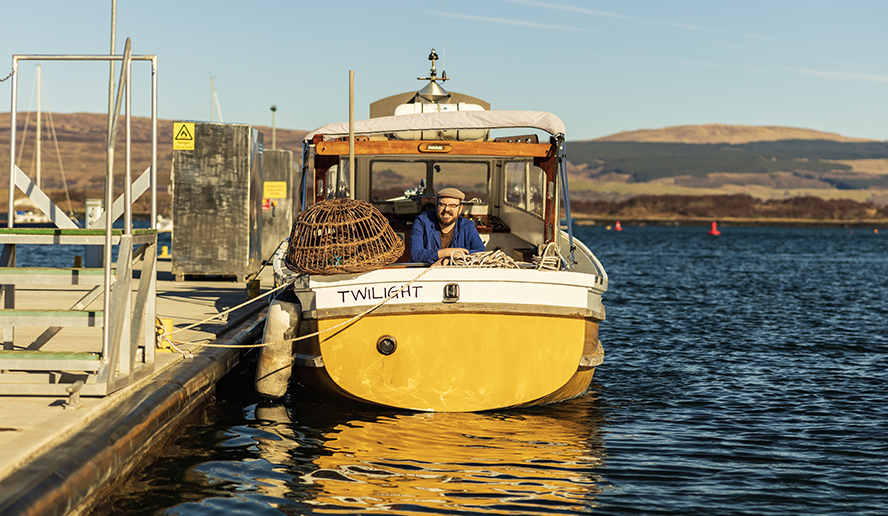
While backpacking with now-husband Ro, he says we “arrived for a weekend” on the Isle of Mull and “never left”. But he says that “never in my wildest dreams”, did he think he’d end up living on the wild west coast of Scotland. For him, there’s something unexpectedly familiar about island life in Scotland. “It’s slower, community-led, filled with storytellers. Now I can’t imagine being anywhere else.”
Banjo and Ro have lived here on a farm for over a decade, along with their dog, Grampa, two pigs, Kath and Kim, and a flock of ducks. For him, “There’s a quiet magic to Mull. The landscape is untamed and cinematic, but it’s the warmth of the community that really captured us,” he explains.
“I love the rhythm of life here – sea swims, foraging walks, chats at the post office. My favourite spot is probably our garden, where the wild meets the domestic, and the animals run free. It feels like living in a painting,” he says.
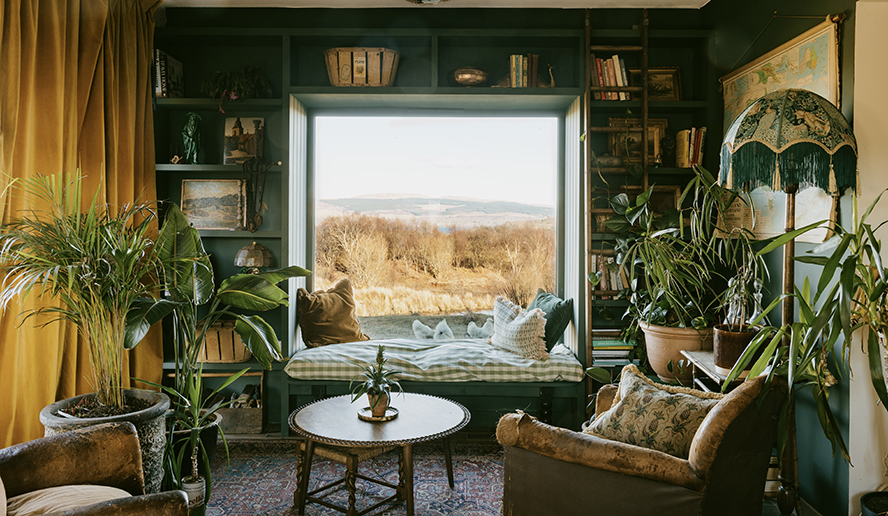
Banjo won the Interior Design Masters in 2022, which he describes as a life-changing event, as he wasn’t working in the interiors industry, nor did he have a traditional background in it. “I just had a head full of ideas and a passion for old things,” he says.
“Winning gave me permission to believe I could actually do this. It opened doors, yes, but more importantly, it gave me a platform to show that design isn’t just about big budgets. It’s about soul, storytelling, and heart.”
He describes his style as “romantic, layered and a little bit wild”. He loves mixing eras, textures, and stories, and his inspiration is as wide as “Aussie beach shacks to Scottish bothies, old hotels, antique markets and even public loos,” explaining that the Victorian Rothesay toilets on the Isle of Bute are stunning. He also says his work is different to other designers as he’s not chasing trends. Instead, he cares more about “how a room feels than how it looks in a photo”.
Since then, he’s become a TV hit while presenting Designing the Hebrides, which first aired on the BBC in 2023, and a second series came the following year. In the show, Banjo finds community spaces across the Hebrides to renovate, as they aren’t “polished or predictable”. He goes for spaces such as village halls, fishing huts, and “forgotten places that are the real hearts of communities”, which he calls “weather-beaten and wonderful and overflowing with character and soul”.
One project in the series that really stayed with him was the Glass Barn at Isle of Mull Cheese. “It was damp and decaying, but it had hosted everything from ceilidhs to cheesemaking. It mattered to people. Watching the community come together and seeing their faces when we revealed the space was deeply emotional. That one still gives me goosebumps.”
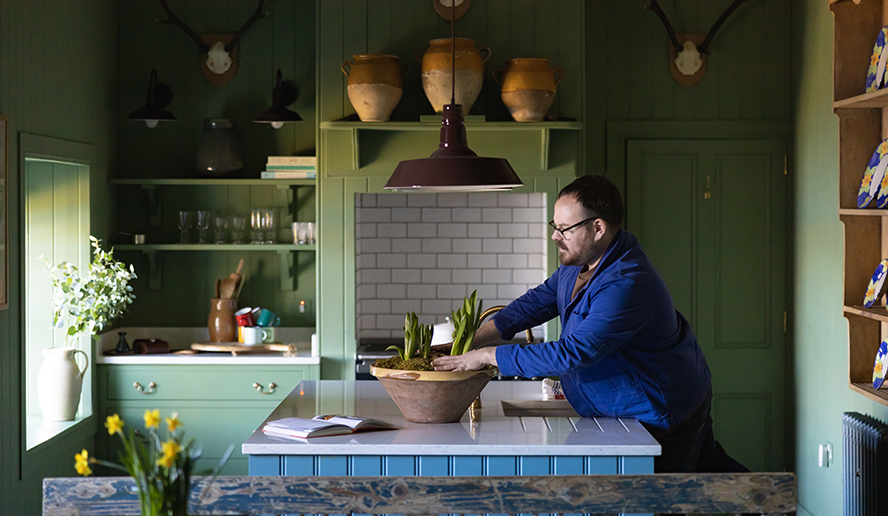
His favourite room to design is a kitchen as they’re “the heart of a home, where people gather, laugh, cook and argue. They tell the richest stories,” he says. He describes his spaces as “deeply personal, full of life and layers,” adding that he uses “what’s to hand – things with patina, history, and soul”.
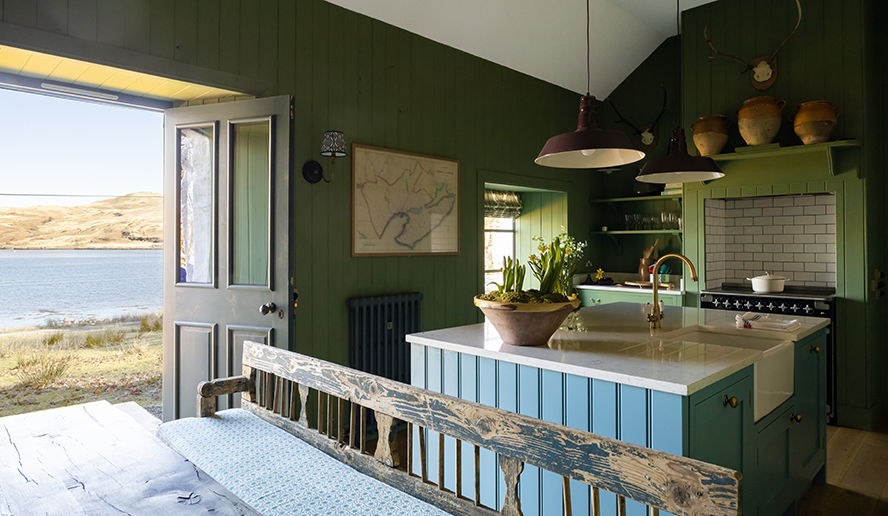
He also loves to use old items and to reuse them. “If it’s got a story, it’s worth saving,” he says. He grew up rummaging through old shops with his mum, so has always loved giving things a second life. “I don’t upcycle for the sake of it; it has to feel authentic. It’s about honouring the past and bringing warmth into the present,” he says.
Much of his ethos can be seen in his recent book, A Place in Scotland: Beautiful Scottish Interiors (published by Quadrille, October 2024), which is full of soulful stays and helps showcase how Scottish style is being redefined. Banjo says this started as “a love letter to Scotland – to the landscapes, the people, the places that linger in your bones”.
Through the book, he wanted to highlight spots that felt lived-in and loved, not just styled, and looked at everything from “farm byres and wild bothies to grand castles and outlandish control towers like HMS Owl,” he says. When it came to how to whittle them down, he “visited dozens of places, drank endless cups of tea with owners, and curated a motley mix of the ones that truly stayed with me. The ones you dream about after leaving”.
His latest project is renovating a historical building, an old laird’s house (a Scottish landowner), on the remote island of Ulva (technically part of Mull), which he describes as a “mad and beautiful” idea. The building was crumbling, but looking past its dilapidated state, Banjo and Ro could see its potential. “We wanted to create something meaningful – a place where people can stay, eat, explore, and feel part of something”. They will be turning the building into an 11-bed hotel, The Grand Island Hotel, and their journey will be another BBC TV series, Banjo and Ro’s Grand Island Hotel, airing in early 2026. Dream Escape will be able to arrange stays here once it’s opened, too. Though they have the dream and the vision, Banjo says “it’s been harder than we imagined. The weather, the logistics, the sheer history of the place. But it’s also been the most rewarding project we’ve ever taken on”.
As the island is so remote and small, they missed their usual easy access to the good food and coffee Mull is known for. This meant they took matters into their own hands and, despite the hardship of their renovation, took on another project, as they felt they “had no choice but to open our own cafe”. They took on the nearby cafe, The Boathouse. A seafood cafe on the waters’ edge, with freshly landed lobster, crab, local oysters and “the best coffee in the Hebrides,” as Banjo describes it. The idea behind renovating the hotel is to eventually attract more people to this little corner of Scotland, which once had a population of 800 less than 200 years ago and has now dwindled to fewer than 20.
‘We want to play a small part in changing that. The hotel isn’t just a business – it’s an invitation. Come, stay, fall in love with the island, and maybe even imagine building a life here. If we can create jobs, bring people in, and help breathe life back into Ulva, then it will have all been worth it.”
IMAGE CREDITS: ©Alexander Baxter / ©Alex Mcleod
Join Our Newsletter
To get a seamless blend of UK heritage, Scottish mist, and Irish soul sent straight to your inbox.
Ireland’s Laden Larder
From coastal foraging to baking in a farmhouse kitchen, Ireland’s immersive culinary experiences are a great way to taste the landscape, learn from locals, and discover the ingredients and traditions...
Discover More
10 of the UK & Ireland’s finest: Golf Experiences
From beautiful fairways and private clubs to exclusive tee times with indulgent dining, luxury accommodation, and exceptional private experiences, Dream Escape affords you peace of mind by handling all your...
Discover More