MEET THE MAKERS
Meet the Artist – Russell Sage
The Somerset-born designer reveals how Scotland’s landscapes, legends and craftspeople shape his exuberant and eccentric hotel interiors. It’s all about the art of storytelling at The Fife Arms, Glenmorangie House and Ardbeg House.
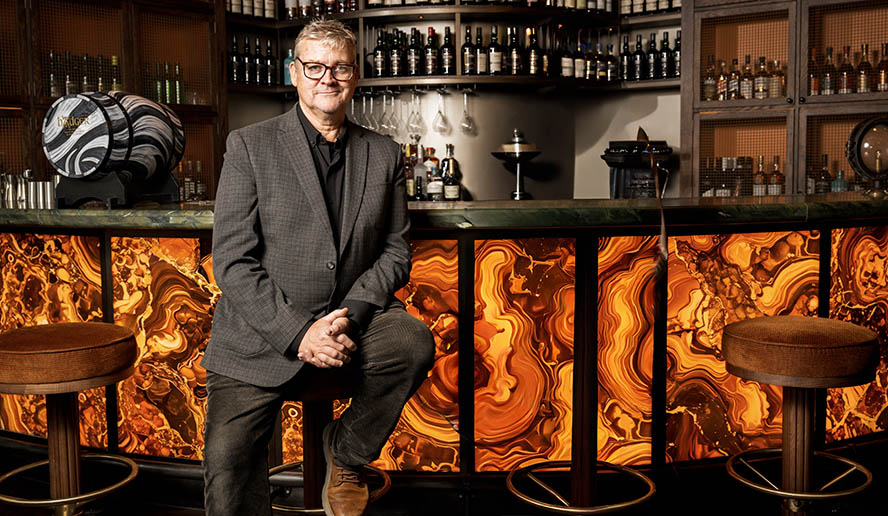
You’ve done three big hotel projects in Scotland in the last six years. What is it about the country that attracts you?
I’m a boy from Somerset – I grew up in a pub just south of Bath – but there’s something about Scotland. I love being there, I love the people. I just feel like it’s a spiritual home for me; I don’t know why. But you know, there are so many incredible people there; they make so many things, and so much has happened there; I’m constantly inspired by the country.
Where do you get your ideas and to what extent are you influenced by fashion?
It’s all about storytelling but telling stories in better ways, drawing on the history of a building and its sense of place. In the past, hotels might have said that all their bedrooms were named after kings, with a print of a different king in each room. We go into much more detail.
I do whatever it takes not to be in fashion. I’m not on the circuit, and I don’t know other interior designers. If someone on my team shows me an Instagram image for inspiration, I tell them not to use it; someone else will use that image. For me, it’s all about finding that original story and creating magic in a place. I do, though, have quite a Victorian gothic tendency, which you can really see at the Fife Arms.
What’s the story you wanted to portray with the Fife Arms near Braemar, which you designed for the Swiss gallerists Iwan and Manuela Wirth?
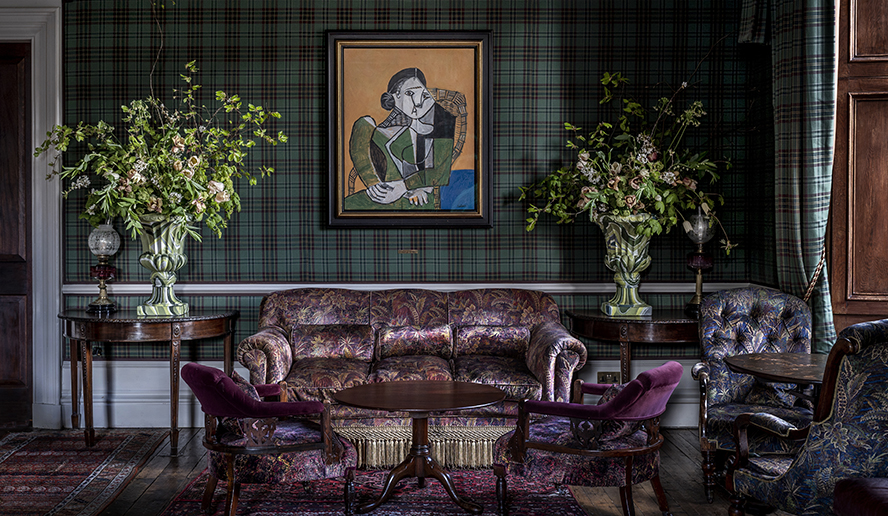
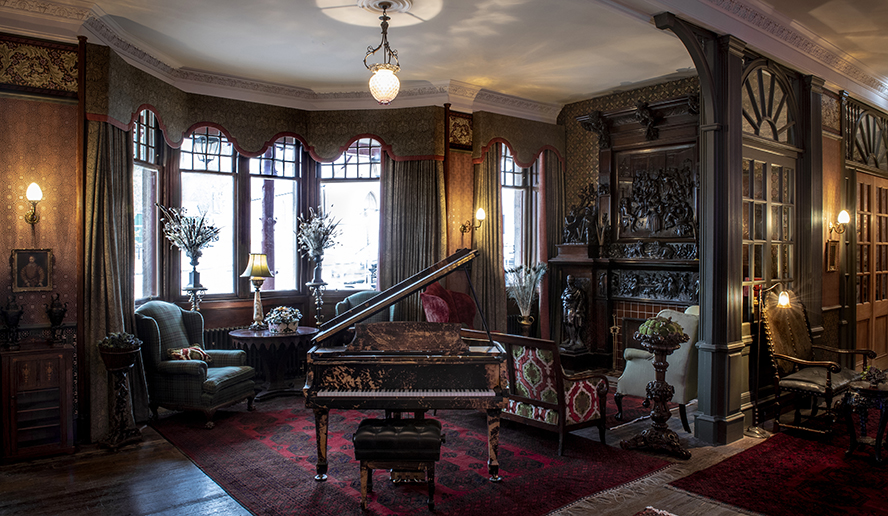
As well as having 16,000 hand-picked antiques and artworks by Picasso, Freud and the former Prince Charles, among others, the Fife is all about extraordinary people in Scotland. It’s a Victorian hotel – Queen Victoria loved Scotland – and we sourced her sketch of a stag that John Brown had shot less than a mile from the hotel, reframed it and put it in the bar.
It’s a central part of the story. There’s a room dedicated to bridges because there was a Victorian bridge architect whose story we told by getting a collection of 100 old-fashioned wooden triangles used by draftsmen and covering the ceiling in them. There’s so much history in the hotel; we worked with two historians from the Edinburgh museum to verify everything. And we really went to town on the corridors, which are often an unloved bit of hotels. We got some beautiful carved pillars from a house in Edinburgh and some big glass cases which we filled with items that tell stories.
What was the inspiration for Glenmorangie House in the Highlands, your first hotel for the luxury goods group LVMH?
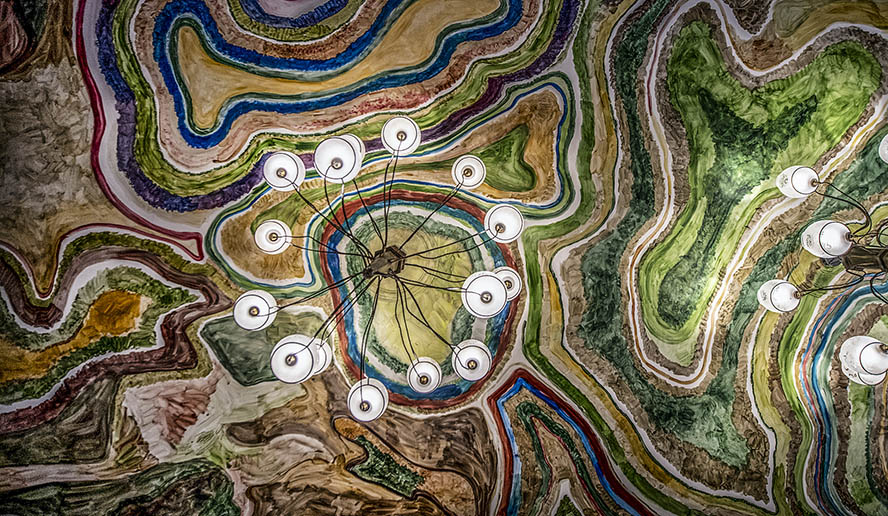
That was a funny project as so much of it happened during lockdown. I didn’t get to meet the client until we were installing everything. Instead, we had online meetings in which they spent a lot of time describing the flavours of whisky and Glenmorangie (there’s an adjoining distillery). Then we wanted to have a visual retelling of that story.
I particularly love the gold living room with its red furniture because it was a sort of breakthrough moment working with the client. I said: ‘I really want to have gold walls as you’re talking a lot about barley fields and I want to create that lovely summer’s glow.’ Then I added that I wanted to do the ceiling gold as well, plus half the woodwork. And then I said I’d add a lovely blood-red sort of colour, like the poppies in the barley fields. They said: ‘Go for it.’
Did that make things easier when you started working on Ardbeg House, another LVMH property with its own whisky distillery on the island of Islay?
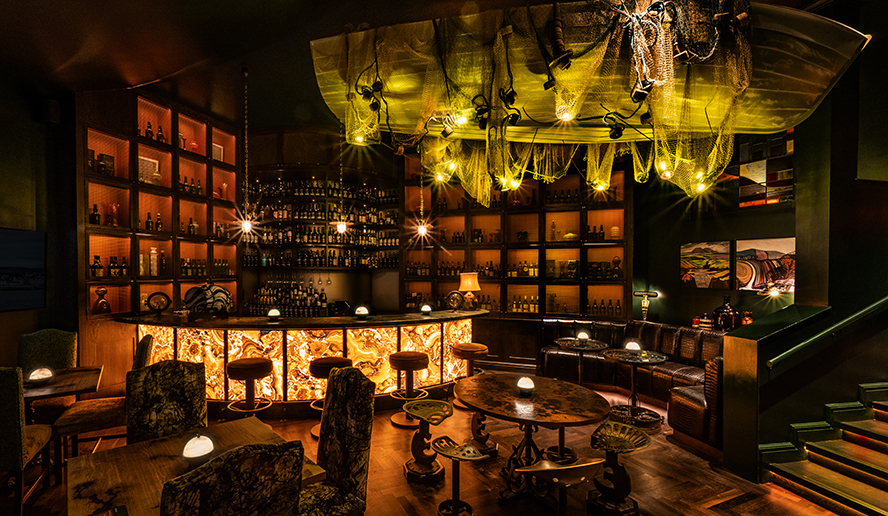
Yes, it meant we could really hit the ground running. When I had a crazy idea, like hanging a fishing boat from the roof of the bar, I could tell them without worrying about how they’d take it. For the first time in my life, I had a client who kept saying ‘I think you need to turn up the volume a bit’. The result is bonkers. There’s something really unique about an island that’s almost entirely a whisky community.
I’ve tried to tap into some of the island’s tall tales, such as the Islay-Gator, the legend of a monster that lives in a bog. It inspired my favourite room there, Monster, which is the sum result of all the bravery in the other rooms. It has an Emperor bed – there’s no point in having a room called Monster without a bed leaving a bit of an impression – made from several beds, bits of old church panelling and pews with great big ball feet and metal pieces hanging off the top a bit like kelp, roots or octopus tentacles. It’s made by people who are really at the top of their fields, including a phenomenal carpenter and metalworker.
How many craftspeople do you work with in addition to people sourcing antiques and items for the hotels?
In addition to about 40 people on the payroll at Russell Sage Design, I have another 30 or 40 craftspeople I work with regularly – carpenters, wallpaper makers, metalworkers, and so on. I’ve got five people full-time on antiques, running the warehouse. We find huge volumes of things we don’t necessarily know what to use them for. At any one time, I’ve probably got 10,000 pieces of furniture in four warehouses in Somerset. And I’m constantly sourcing products; I haven’t had a holiday in 24 years, though it feels I’m on holiday all the time.
One of the crafts you like to honour in your hotels is knitting. How did that come about?
Yes, it all started with the Fife Arms and a team of ladies called the Deeside Knitwits who knit for charity. The year we were there, they were knitting red squirrels. So we bought them all and hid them around the hotel. Then with Glenmorangie House, there’s a room that’s completely over the top like a sort of French patisserie with loads of floral wallpaper and knitted cakes (it was really unlike LVMH, but they loved it). We have a core group of knitters, and at Ardbeg House, we got some of the locals from the WI (Women’s Institute) to knit crabs, which are dotted around the room called The Wee Beastie.
What are you working on now?
We have a few exciting things in the pipeline. We’re currently overseeing a sophisticated refurbishment of the iconic Dukes London in Mayfair, but we’re also working on a lovely little project for Luss Estates, owned by the Colquhoun family for centuries, which should be ready in the summer. The Loch Lomond Arms is by the water and is a modest coaching inn with just 15 bedrooms; it’s set in the tiny village of Luss. But it packs a really big punch because there aren’t that many inns that come with 45,000 acres, where you can have an amazing adventure. It makes it rather fun together with the family’s extraordinary history. One family member apparently had a pet tiger with him while he fought in the trenches. We’re going to tell that story.”
IMAGE CREDITS: Courtesy of The Fife Arms and Glenmorangie May / ©Ben Shakespeare Photography / ©Sim Canetty-Clarke
Join Our Newsletter
To get a seamless blend of UK heritage, Scottish mist, and Irish soul sent straight to your inbox.
Treasures of Scotland
The Antonine Wall The most northerly frontier of the Roman Empire, the awe-inspiring Antonine Wall was the last frontier wall the Romans ever built – and one of the best....
Discover More
Inside Gregans Castle Hotel with Simon Haden
Few hotels succeed in pulling off luxurious, gourmet experiences alongside ambitious biodiversity projects. But Gregans Castle isn’t like other hotels. Dream Escape meets owner Simon Haden, who, together with his...
Discover More